PREGNANCY
5 Weird Things That Happen to Your Body After Birth
Not all postpartum body changes are expected. Here, a few common ones that may surprise you.

Written by
Happiest Baby Staff
SHARE THIS ARTICLE
PARENT PICKS
Bestsellers
PREGNANCY
Written by
Happiest Baby Staff
SHARE THIS ARTICLE
Bestsellers
Your vagina and perineum will be swollen and achy. It will hurt to pee and poop. There will be bleeding and discharge. Your breasts will swell with milk. Most mums-to-be are prepared for these typical postnatal body changes. Or scratch that, most mums-to-be are aware of these changes. After all, nothing can totally prepare you for what childbirth will be like...or the recovery. But there are other postnatal body changes—like the period-like cramps or the full-body shivers—that can really take a new parent by surprise...and even freak you out! We do not want you to freak out! So read on for the intel on the weird postnatal body changes no one is talking about.
Before your uterus transformed into a womb, it was about the size of a pear and weighed just 55 grams. By the time you deliver, it is the size of a watermelon and weighs over 1 kg. That hefty watermelon then needs to shrink back to a pear...and your body wastes no time starting the process—which you can really feel! Most of these afterbirth pains will be dull, but some can be jarring and sharp. You will likely feel these crampy/contraction-like pains for about two to three days, but the shrinkage continues for six weeks. Since breastfeeding stimulates uterine contractions, these aches kick up a notch when you are nursing. For many, applying gentle heat, like a wrapped hot water bottle, to the area can help.
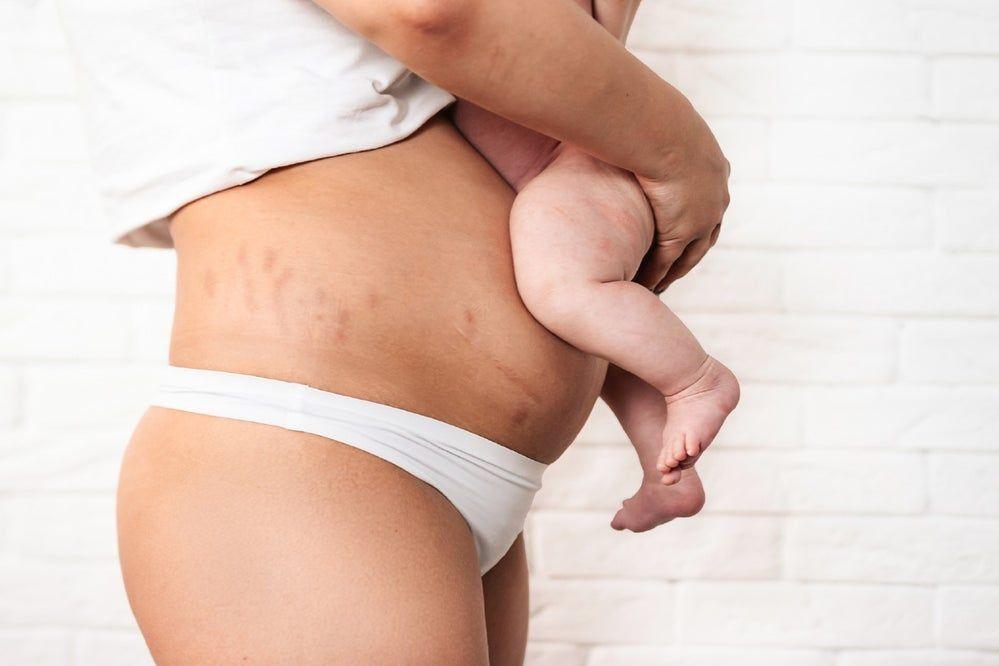
Once your baby, placenta, and so many fluids exit your body, you would think your baby bump would deflate after birth. It will not. Remember, while your uterus is working hard to shrink, it is still baby-sized. Plus, you are swollen, especially if you were induced, had a c-section, or were given IV fluids. And you may be constipated, too, which further distends tummies. And there may be another reason for a still-pregnant-looking belly after birth: Up to 68% of those who have had a baby experience what is called diastasis recti, which is when your growing uterus pushes your rectus abdominis (or your would-be six-pack muscles), making them longer and weaker. These tired, stretched-out muscles partially or completely separate, causing a bulge in the middle of your tummy. The good news: Separation usually goes back to normal by the time your little one is 8 weeks old. If it has not, get a referral for a physical therapist, who will offer specific exercises that will help. Whatever you do, do not ignore it: Doing so may up your risk for back problems, constipation, and urine leaking.
Oddly enough, the postpartum period can feel a lot like menopause. University of Pittsburgh researchers found that about 29% of new mums experience hot flashes, including night sweats, after delivery. Just like with menopause, the culprit is hormones. When you are pregnant, a whole lot of progesterone and estrogen course through your body—and then suddenly plummet after your baby and placenta are delivered. This hormone nosedive mucks with your ability to regulate your body's temperature. At the same time, your postnatal body is churning out the hormone prolactin to prepare for breastfeeding, which can also turn up the heat. According to the study above, postnatal hot flashes tend to be the worst two weeks after birth, after which they often decline. But if your sweating is accompanied by a fever (no matter when), this may be a sign of infection and you should call your healthcare provider ASAP.
During the first hour following birth, whether vaginal or c-section, between 32% and 44% of new mums experience head-to-toe shivers, complete with chattering teeth. It is thought that post-baby shakes may be due to a combo of hormonal changes, the adrenaline rush from giving birth, and fluid shifts that occur during delivery. Go ahead and bundle up to keep warm, but do not try to control your shivering, especially if you have had a cesarean. Doing so may strain your incision and cause it to tear. Typically, whole-body shakes kick in immediately post-birth (or even during delivery) and stop within the hour. But if you are shivering and chattering continues or you have a fever, you may have an infection and should reach out to your healthcare provider.
Ah, pregnancy hair, all thick and shiny and full...that was nice, was it not? The high levels of hormones flowing through your body during pregnancy actually made you lose far less hair than you normally would. However, after your wee one is born, those once luxurious locks often thin out—and may even fall out—thanks to the sudden hormone dip. It will take roughly six months before your hair stops the great postpartum shed. It will take about six more months for your hair’s normal bouncy, fullness to be restored. To help get there, eat lots of nutrient-rich fruits and vegetables and be gentle with your hair by using the cool setting on your hairdryer and putting your hair up in only loose ponytails.
It is widely recommended that all new mums receive a postnatal checkup within the first six weeks after birth. But if you suspect anything is amiss before then, never hesitate to reach out to your healthcare provider. And know this: Rather than a single doc visit, the World Health Organization recommends that all new mums and babies need at least four postnatal checkups in the first 6 weeks. This way, you can easily check in and ask questions about any of the above body-after-baby issues...or anything else!
For more postnatal need-to-know info, check out these stories:
Disclaimer: The information on our site is NOT medical advice for any specific person or condition. It is only meant as general information. If you have any medical questions and concerns about your child or yourself, please contact your health provider. Breastmilk is the best source of nutrition for babies. It is important that, in preparation for and during breastfeeding, mothers eat a healthy, balanced diet. Combined breast- and bottle-feeding in the first weeks of life may reduce the supply of a mother's breastmilk and reversing the decision not to breastfeed is difficult. If you do decide to use infant formula, you should follow instructions carefully.