SNOO
SNOO vs. Sleep Positioners
SNOO keeps babies safely on the back, but it is not a sleep positioner. Sleep positioners hold babies in an abnormal that can lead to an increased risk of suffocation for babies. Here’s what parents need to know…

Written by
Dr. Harvey Karp
Are Sleep Positioners Safe for Infants?
Positioning babies on their backs for sleep is one of the most important things parents can do to reduce the risk of infant sleep death. Infant sleep positioners—like baby nests, pillow loungers, and crib wedges—sound like they are designed to help, but, in fact, they raise the risk of suffocation.
In 2017, the Federal Drug Administration (FDA) and The American Academy of Pediatrics (AAP) both warned parents not to let babies sleep in sleep positioners, baby nests, or baby pods. These products feature dangerous bolsters, wedges, or pillows. If a baby turns her face or partially rolls into one of these plush supports, her thin neck might not be strong enough to lift up her heavy head and place it out of danger. Once face down, it can be very hard to breathe.
Is SNOO a Sleep Positioner?
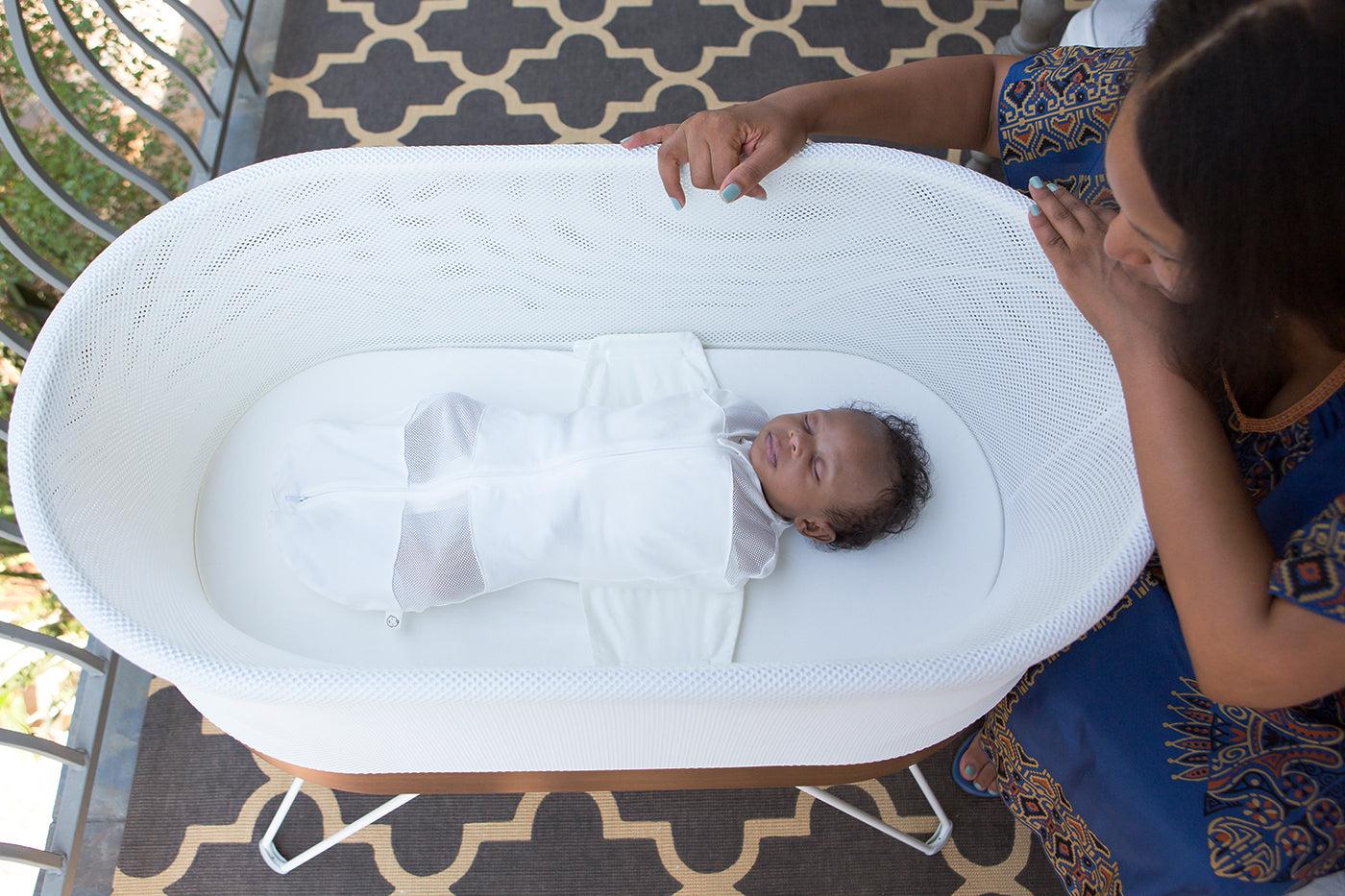
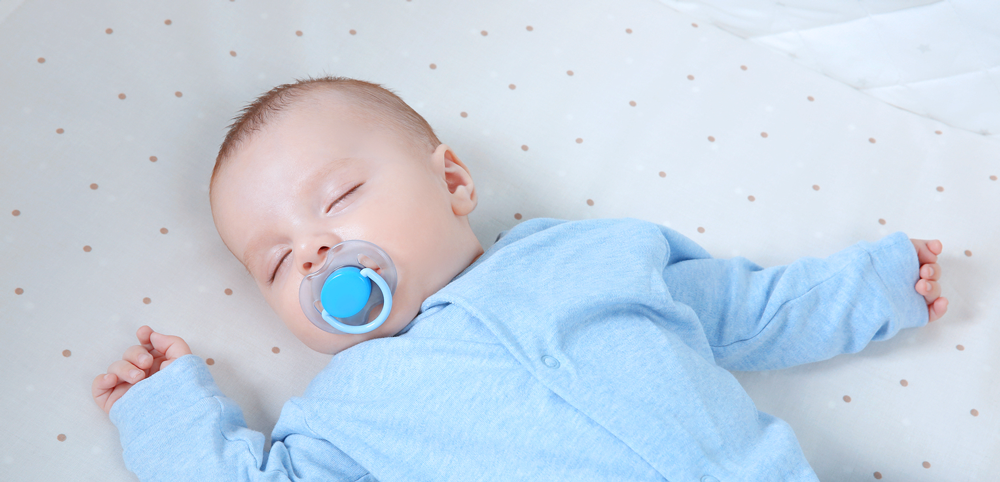
No, SNOO is not a positioner because it doesn’t have the pillows, cushions, or bolsters associated with suffocation deaths. Yes, it keeps a baby flat on the back…but by doing this, SNOO is keeping babies in the normal back position, which is the sleep position recommended by all pediatricians. (Back-sleeping is the AAP’s #1 safe sleep recommendation.) SNOO doesn’t position babies in an abnormal position like side or stomach.
Additionally, SNOO is an anti-rolling, anti-positioning device that prevents squiggly babies from rolling into a risky position. SNOO babies sleep safely in a specially designed swaddle that secures to the bed and keeps babies from rolling to an unsafe position. (SNOO is only safe to be used in motion WITH the attached sleep sack.) Our 5-second swaddle makes SNOO the only bassinet that prevents risky rolling—making it the safest baby bed ever made! In fact, because of SNOO’s unique ability to ensure back-sleeping for all nights and naps, the FDA is evaluating SNOO’s potential to prevent infant sleep death.
In SNOO, the baby’s face is entirely free with no risk of rolling into obstructive material. There’s plenty of room between the baby and the sides of the bassinet, which are made of breathable mesh to provide optimal airflow. The sleep sack is also vented to reduce overheating (like rolling to the stomach, overheating is a known SUID risk factor). And parents can rest easy knowing that our swaddle was vetted by the Consumer Product Safety Commission and has the New York Times’ seal of approval!
Tragically, there are about 3,600 babies who die of sleep-related deaths every year—a number that has hardly changed in 20 years. And 50% of the babies who die in their sleep have been found on their stomachs. So, if we can keep babies on their backs, perhaps we can reduce some of those deaths. So far, we have measured more than 77,000,000 hours of sleep with no reported injuries or deaths to the CPSC. That is landmark progress and may well have prevented 20 to 40 deaths.
Can Newborns Sleep at an Incline?
Sleeping at an incline is risky for newborns, and the AAP recommends a flat (less than a 10-degree angle), firm sleep surface for babies. Between 2019 and 2020, millions of inclined sleepers were taken off the market because they were linked to 73 infant death, as well as more than 1,000 other incidents reported to the Consumer Product Safety Commission. When the CSPC investigated these slanted sleepers, the commission found that none of the inclined beds or swings they tested were safe for sleep.
Sleeping at a steep angle (an angle of 10-30+ degrees) can cause a baby’s head to droop down toward the chest. Because a baby’s neck muscles are still developing and their heads are heavy, they might not be strong enough to lift the head back up. This can potentially cut off an infant’s airflow and lead to suffocation.
Parents who would like to elevate their baby’s head to try to alleviate a stuffy nose or reflux symptoms can use SNOO Leg Lifters to raise the baby’s head by a slight, safe 2.5-degree angle (well under the maximum federally recommended 10 degrees).
Are Crib Wedges Safe for Babies?
No, crib wedges are not safe for babies, except in rare cases where a baby has a serious condition that the pediatrician feels will be helped by a wedge. In addition to positioning babies at an unsafe incline, crib wedges can cause babies to slide down to the bottom of the crib—putting them in another dangerous sleeping position. Crib wedges may make it easier for babies to roll over, and if a baby does roll, their face can become smushed into the plush material of the crib wedge, blocking their nose and mouth.
Final Thoughts on Sleep Positioners
There’s nothing more important than a baby’s safety. But when it comes to sleepers, some products have confusing names or tout claims that can make their safety—or lack thereof—unclear.
The bottom line: Babies should sleep in their own beds flat on their backs. They should not sleep in sleep positioners, inclined sleepers, or on crib wedges. Fortunately, SNOO is a sleep NON-positioner. It keeps them flat on the back in the most natural/neutral position that all pediatricians recommend…which is why so far, babies have slept safely for millions of hours in their SNOOS!
Disclaimer: The information on our site is NOT medical advice for any specific person or condition. It is only meant as general information. If you have any medical questions and concerns about your child or yourself, please contact your health provider. Breastmilk is the best source of nutrition for babies. It is important that, in preparation for and during breastfeeding, mothers eat a healthy, balanced diet. Combined breast- and bottle-feeding in the first weeks of life may reduce the supply of a mother's breastmilk and reversing the decision not to breastfeed is difficult. If you do decide to use infant formula, you should follow instructions carefully.
SHARE THIS ARTICLE
PARENT PICKS
Bestsellers