PREGNANCY
35 Weeks Pregnant: What’s That Ouch Down There?
Your little one is packing on the pounds now!

Written by
Dr. Harvey Karp
Your Baby at 35 Weeks
Your little one likely weighs over 2.3 kilograms (around 5 pounds) and measures about 45 centimetres long. From here, growth slows in length but your bub will keep gaining weight—getting rounder and cuddlier each day. Their big job now is to pack on fat, and yes…you’ll be putting on a little more too!
At 35 weeks, your baby’s lungs, brain, and nervous system are still maturing, while the circulatory and musculoskeletal systems are almost complete. Their bones are strengthening, but their kneecaps haven’t yet formed, and their skull bones remain unfused. In fact, babies are born with more bones than adults.
Why? The skull’s “floating” bones overlap during birth to help the head pass through the birth canal. This clever design also leaves room for the rapid brain growth that continues after birth.
Newborns have two fontanelles (soft spots). The larger one sits at the front of the head, and a smaller one lies towards the back. Both are covered by a strong, flexible membrane that fully protects the brain—so don’t worry, it’s safe to touch your baby’s head when stroking or washing their hair.
35 Weeks Is How Many Months?
At 35 weeks, you’re around 8 months pregnant.
How Big Is My Baby at 35 Weeks?
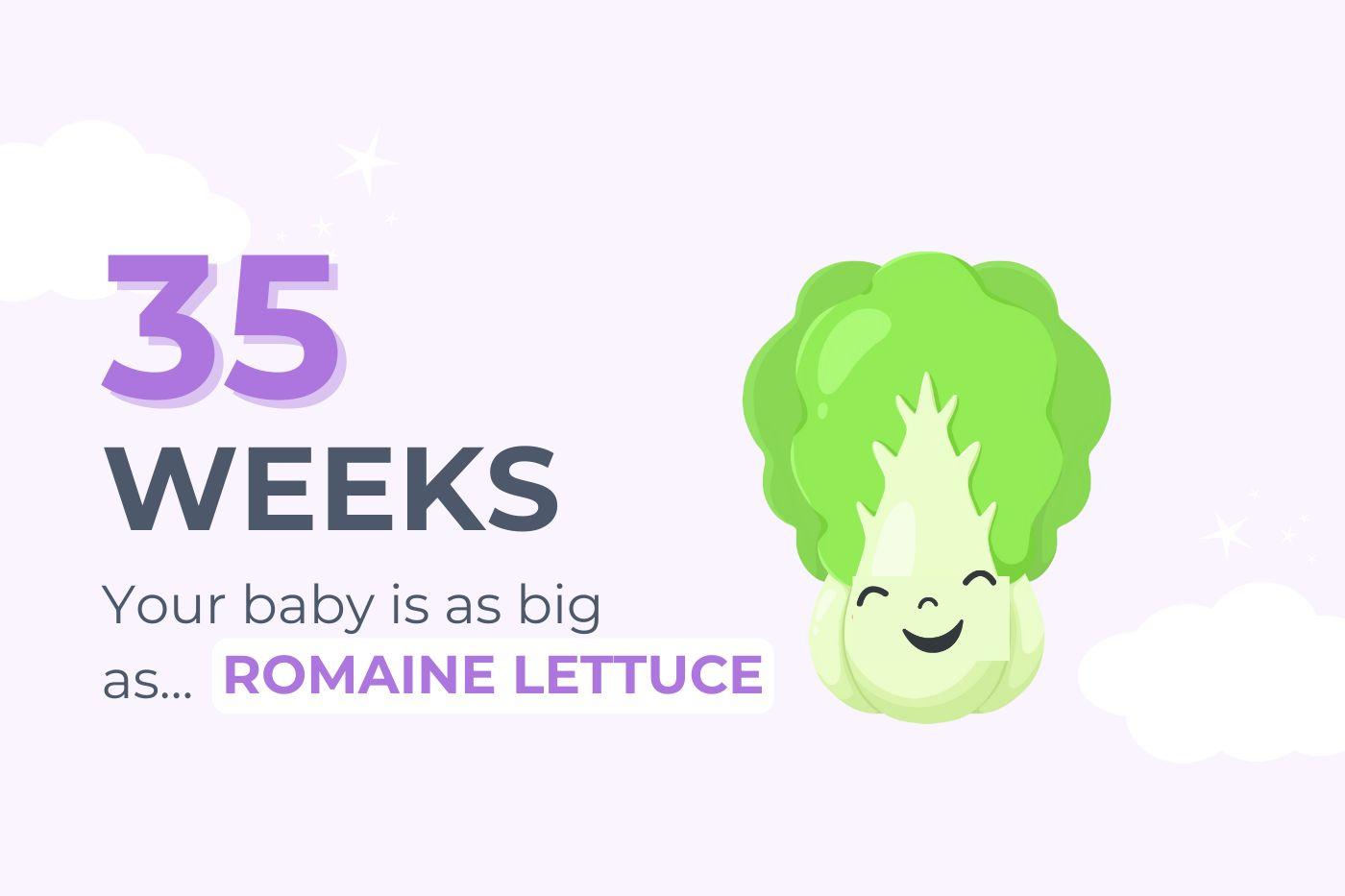
Your baby is about the size of a romaine lettuce.
35 Weeks Pregnant: What to Expect
If your normal stride has turned into a bit of a waddle, welcome to the club!
When your baby “drops” into your pelvis, it puts pressure on your hips, pelvis, and bladder—hence the constant dashes to the loo. It can also make sitting or lying comfortably a challenge. Relief may come from floating in a warm bath, pool, or even the ocean. The upside? Once your baby settles lower, you may feel less pressure on your lungs and find it a bit easier to breathe.
You may also experience sharp, shooting pains deep in the pelvis or vagina—often called “lightning crotch.” This happens when your baby’s head presses on pelvic nerves or as your cervix begins to dilate. It often strikes when you move suddenly—or when your baby does!
Braxton Hicks contractions are also common now. Unlike real labour contractions, they don’t get stronger over time, aren’t regular, and often ease up with rest, movement, or water. If you’re ever unsure, ring your midwife or doctor.
Some parents-to-be also notice wrist or hand pain at this stage. Extra fluid can pinch the nerves in your wrist, causing temporary carpal tunnel syndrome. A splint, rest, or icing the area can help until the swelling disappears after birth.
35 Weeks Pregnant Symptoms
- Fatigue and breathlessness
- Needing to wee often
- Trouble sleeping
- Heartburn
- Swollen ankles and feet
- Lower backache
- Haemorrhoids
- Breast tenderness
- Braxton Hicks contractions
- “Pregnancy brain” forgetfulness
35 Weeks Pregnant To-Do List
- Stock up on nappies and wipes: You’ll be using these in no time. Don’t overbuy newborn sizes, though—babies often outgrow them quickly. Pop a few in your hospital bag for the trip home.
- Treat yourself: Book a haircut, manicure, pedicure, or pregnancy massage. If you’re going for a pedicure, check the footbath is disinfected, and consider bringing your own polish to reduce any risk of fungal infection.
- Buy a few bottles: Even if you plan to breastfeed, it’s handy to have some bottles ready. Once breastfeeding is established (usually after 2–3 weeks), your midwife or doctor may suggest offering an occasional bottle so your baby learns to take one. If you’re formula feeding, discuss options with your care provider.
- Learn your hospital or birth centre’s newborn procedures: Standard practices may include vitamin K, eye ointment, delayed cord clamping, and rooming-in. Ask questions ahead of time so you know what to expect. If you’re birthing in the UK or Australia, policies can vary between trusts, hospitals, and birth centres.
Pregnancy Myth or Fact?
“Pregnant people should prepare their nipples for breastfeeding.”
False! There’s no need to “toughen up” your nipples. Soreness usually comes from an improper latch or tongue tie. Overstimulation can even trigger early labour (it’s sometimes used medically to induce contractions).
If you have flat or inverted nipples, ask your midwife for support—there are special shells or shields that can help.
Pregnancy Quote of the Week
“On the few occasions that my crying baby fell asleep before I did, I used the time for me! I soaked in a bubble bath, relaxed with a drink, read a book, and prayed that she would sleep a little longer.”
— Frances Wells Burck, Babysense
Disclaimer: The information on our site is NOT medical advice for any specific person or condition. It is only meant as general information. If you have any medical questions and concerns about your child or yourself, please contact your health provider. Breastmilk is the best source of nutrition for babies. It is important that, in preparation for and during breastfeeding, mothers eat a healthy, balanced diet. Combined breast- and bottle-feeding in the first weeks of life may reduce the supply of a mother's breastmilk and reversing the decision not to breastfeed is difficult. If you do decide to use infant formula, you should follow instructions carefully.






SHARE THIS ARTICLE
PARENT PICKS
Bestsellers