PARENTS
Sleep: The Ultimate Brain Boost
We all feel better after a good night’s rest…but why? And does all of that “feeling better” actually impact our overall mental health? Turns out, it does.

Written by
Happiest Baby Staff
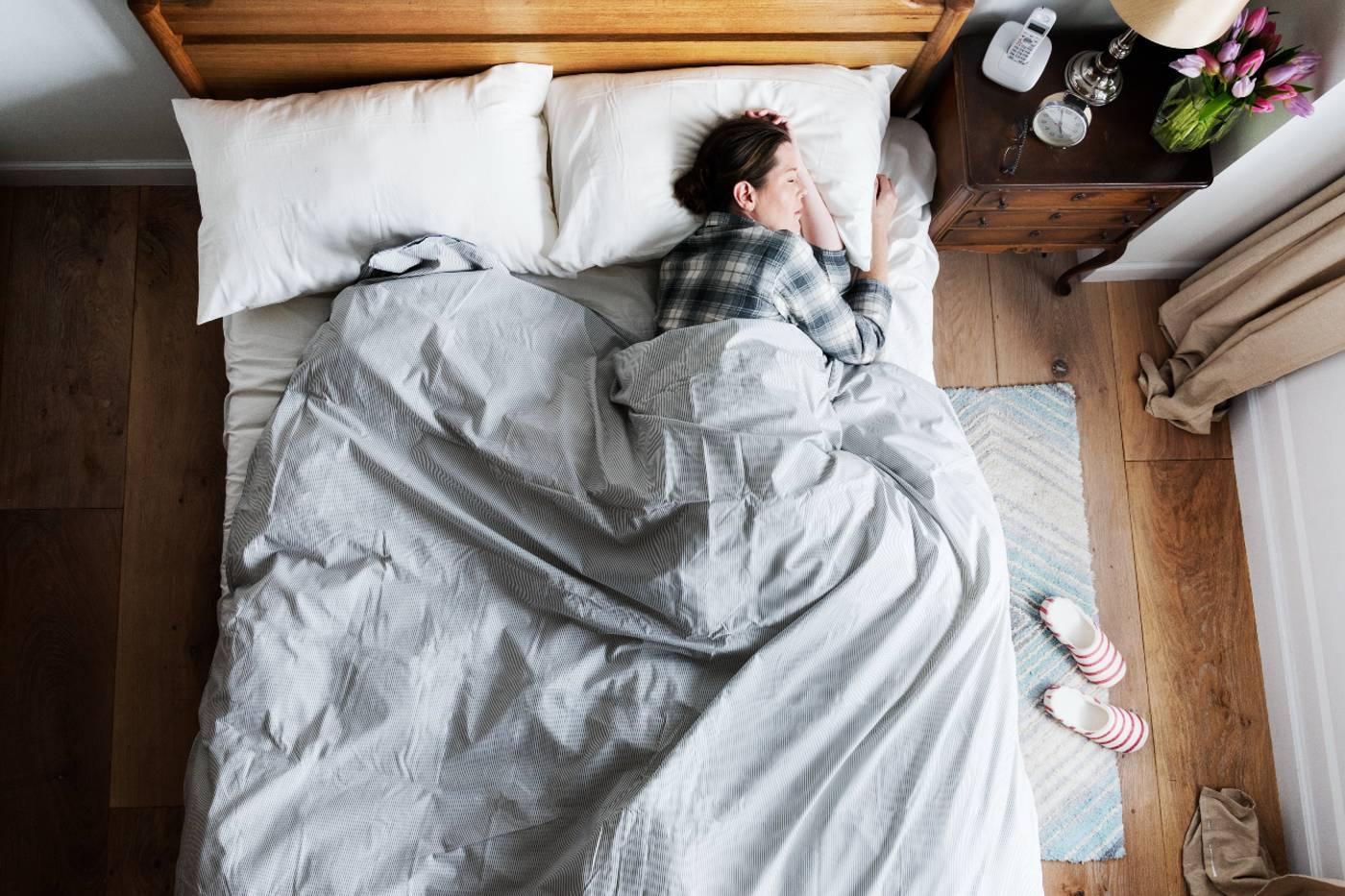
We all feel better after a good night’s rest…but why? And does all of that “feeling better” actually impact our overall mental health? Turns out, it does!
Sleep, quite simply, helps your brain work properly. When you are snoozing, your brain is busy forming new pathways to help you learn and remember information, make decisions, problem-solve, pay attention, and be creative. And the brain boost you get during sleep also has a “profound effect” on your emotional and mental health. Clocking at least 7 hours of sleep a night can help defend against depression, squelch a sour mood, improve happiness, and nix anxiety. Read on to learn about the many ways sleep helps protect our mental health!
How Sleep Improves Mood
Have you ever noticed how you are less likely to blow your top or break down over something seemingly trivial when you get enough ZZZs? That is because while we are sweetly dreaming in REM-sleep, our brain is especially primed to regulate the emotional events we just encountered during the day, which improves our ability to both understand and control our feelings during our waking hours. REM sleep occurs in the second half of the night, so if you skimp on sleep, you spend less time in this important sleep stage. REM sleep is so powerful, in fact, that clocking some quality REM-sleep before an emotional experience also helps our brains better respond to Big Feels. Besides helping to stave off overreactions, proper sleep bolsters positive experiences, too, which is likely part of the reason many experts dub sleep “overnight therapy.” For example…
Sleep improves life satisfaction.
When both new and established parents get sufficient sleep it results in enhanced mental health and overall life satisfaction, according to a 2022 report in the journal Sleep Health. Along the same lines, a report in PLOS ONE found that self-reported “sleep quality” significantly impacted measures of happiness and stress.
Sleep fosters feelings of joy.
When people slept longer than their usual amount, they tended to derive more joy from positive experiences the following day. And they were better able to hold onto those feel-good emotions, even when faced with something stressful, notes a 2020 report in the journal Health Psychology.
Sleep helps stave off depressive symptoms.
Over 90% of folks who have “good sleep health,” report no significant symptoms of depression, according to the National Sleep Foundation’s 2023 Sleep in America Poll.
Sleep reduces stress.
A 2021 meta-analysis in Sleep Medicine Reviews found that improving sleep helps reduce depression, anxiety, and stress—and the greater the sleep improvements, the greater the mental health improvement.
How Poor Sleep Impacts the Brain
While adequate sleep (7+ hours a night for adults) helps to improve mood and brain function, a lack of sleep does the opposite. Sadly, according to the Centers for Disease Control and Prevention in America, 1 in 3 adults do not get enough ZZZs…with new parents catching the brunt of this sleep loss. (Research shows that after a baby is born, mums lose over an hour of sleep each night!)
Without proper sleep, neurons in the brain get overworked and lose brain plasticity, which negatively impacts basic thinking and mood. The repercussions are wide-reaching. For instance, folks with insomnia may have a tenfold higher risk of developing depression and an increased risk in anxiety compared to those who get adequate rest. (It is thought that insomnia may increase inflammatory markers and alter key neural processes, including the brain’s stress response, which impacts emotional regulation, stability, and more.)
And there are more ways insufficient sleep can impact the brain…
Insufficient sleep may heighten anxiety.
Lack of sleep can “activate anxiety” in those who are at high-risk for it and increase anxiety in otherwise healthy individuals.
Lack of sleep can stoke depressive symptoms.
Folks who regularly clock less than 7 hours of sleep a night are three times more likely to experience moderate to severe symptoms of depression than those who slept the recommended 7 to 9 hours. Interestingly, research suggests that if Mum sleeps poorly, both she and her partner are more likely to have depressive symptoms.
Poor sleep can exacerbate symptoms of postnatal depression.
Research in the journal BMC Pregnancy and Childbirth shows that women with poor sleep are more likely to experience depressive symptoms during pregnancy and after the baby is born. At the same time, sleep loss has been shown to worsen PPD symptoms, too.
Sleep loss may negatively impact parenting.
Research shows that sleep loss can make it hard for caregivers to regulate their emotions, which results in less “positive parenting” in the hour before their child’s bedtime. Another report found that 52% of parents who got less than 8 hours of shut-eye a night lost their patience or yelled at their children. (Dr. Harvey Karp on how yelling hurts kids.)
Being short on sleep boosts stress.
Insufficient sleep (6 hours or less) can significantly increase frequent feelings of stress, and other types of “mental distress” (such as depression, anxiety, and other emotional problems), according to a 2021 report.
Inadequate sleep increases feelings of anger.
About 45% of people who get less than 8 hours of sleep a night are more likely to report feeling irritable or angry, according to the American Psychological Association. (When sleep-deprived, the brain has an incredibly hard time suppressing the reactivity in the emotional center of the brain called the amygdala.)
***
REFERENCES
- National Heart, Lung and Blood Institute: Sleep Deprivations and Deficiency, How Sleep Affects Your Health
- Sleep Foundation: Mental Health and Sleep
- Emotion, emotion regulation and sleep: An intimate relationship. AIMS Neuroscience. December 2017
- Problems associated with short sleep: bridging the gap between laboratory and epidemiological studies. Sleep Medicine Reviews. August 2010
- The Role of Sleep in Emotional Brain Function. Annual Review of Clinical Psychology. January 2014
- The influence of sleep and movement on mental health and life satisfaction during the transition to parenthood. Sleep Health. October 2022
- Better sleep, better life? testing the role of sleep on quality of life. PLOS ONE. March 2023
- Sleep duration and affective reactivity to stressors and positive events in daily life. Health Psychology. December 2020
- National Sleep Foundation’s 2023 Sleep in America Poll
- Improving sleep quality leads to better mental health: A meta-analysis of randomised controlled trials. Sleep Medicine Reviews. December 2021
- Centers for Disease Control and Prevention (CDC): Do You Get Enough Sleep?
- Long-term effects of pregnancy and childbirth on sleep satisfaction and duration of first-time and experienced mothers and fathers. April 2019
- The Impact of Studying Brain Plasticity. Frontiers in Cellular Neuroscience. February 2019
- Sleep Foundation: How Lack of Sleep Impacts Cognitive Performance and Focus
- Johns Hopkins Medicine: Depression and Sleep: Understanding the Connection
- Insomnia and the risk of depression: a meta-analysis of prospective cohort studies. BMC Psychiatry. November 2016
- Tired and apprehensive: anxiety amplifies the impact of sleep loss on aversive brain anticipation. Journal of Neuroscience. June 2013
- Insomnia, anxiety, and depression during the COVID-19 pandemic: an international collaborative study. Sleep Medicine. November 2021
- Suicidal ideation in depressed postpartum women: Associations with childhood trauma, sleep disturbance and anxiety. Journal of Psychiatric Research. July – August 2015
- A scoping review of non-pharmacological perinatal interventions impacting maternal sleep and maternal mental health. BMC Pregnancy and Childbirth. August 2022
- Poor sleep quality increases symptoms of depression and anxiety in postpartum women. Journal of Behavioral Medicine. July 2018
- Maternal stress, sleep, and parenting. Journal of Family Psychology. April 2019
- American Psychological Association: Stress and Sleep
- CDC: Effect of Inadequate Sleep on Frequent Mental Distress
- The Amygdala, Sleep Debt, Sleep Deprivation, and the Emotion of Anger: A Possible Connection? July 2018
Disclaimer: The information on our site is NOT medical advice for any specific person or condition. It is only meant as general information. If you have any medical questions and concerns about your child or yourself, please contact your health provider. Breastmilk is the best source of nutrition for babies. It is important that, in preparation for and during breastfeeding, mothers eat a healthy, balanced diet. Combined breast- and bottle-feeding in the first weeks of life may reduce the supply of a mother's breastmilk and reversing the decision not to breastfeed is difficult. If you do decide to use infant formula, you should follow instructions carefully.


SHARE THIS ARTICLE
PARENT PICKS
Bestsellers