TODDLER
How to Boost Good Behaviour With Toddler Time Ins
Encourage cooperation with bits of attention, praise, and play.

Written by
Dr. Harvey Karp
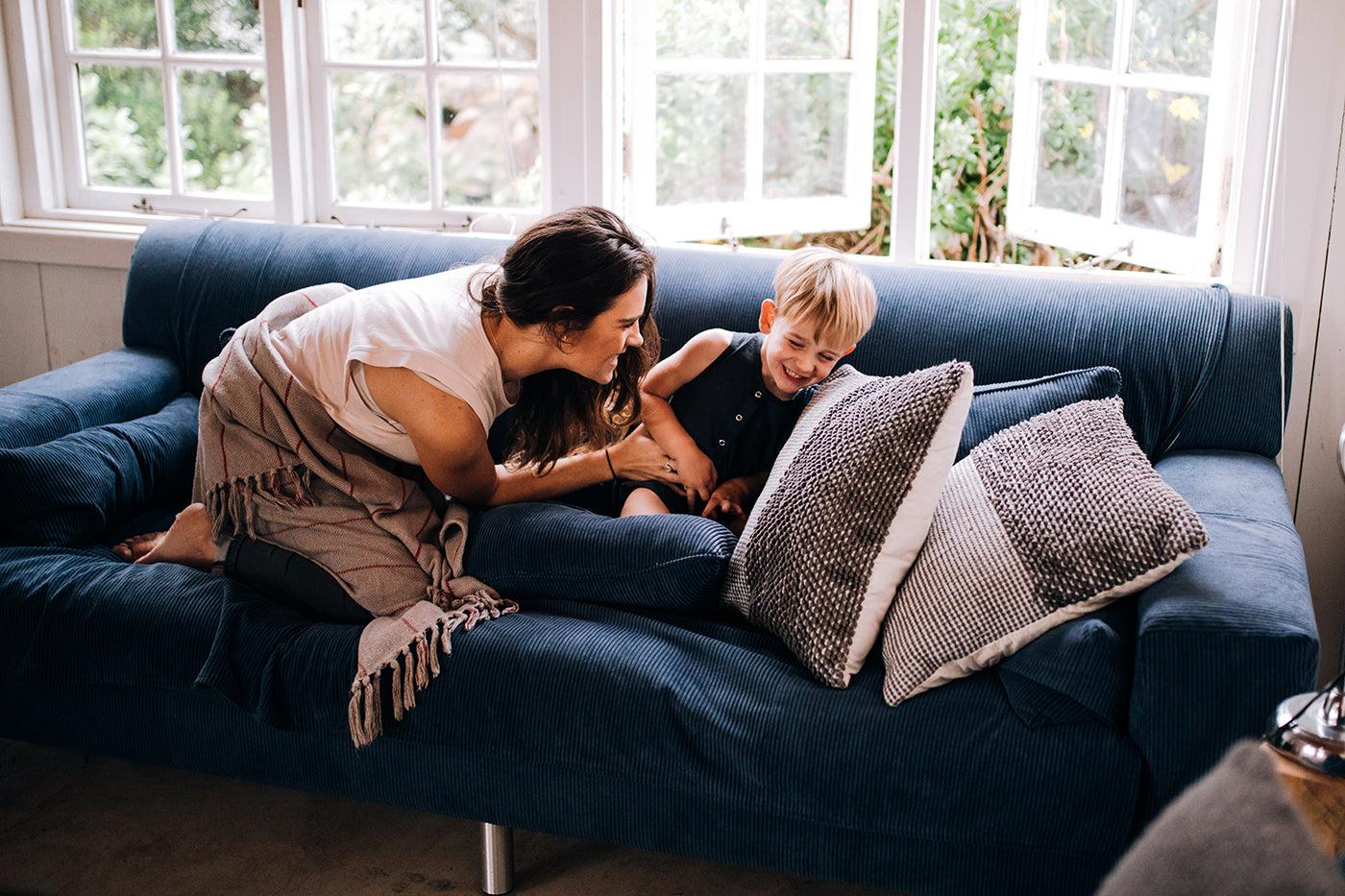
I am sure you have heard of time-out (where a misbehaving child is made to sit alone). Well, time-in is just the opposite. It is when a well-behaving child is given tiny bits of play and encouragement. Experienced parents and teachers know that a steady stream of time-ins is a much more effective way of raising a happy, cooperative child than a steady stream of time-outs! There are many types of time-ins. Here are a few of my favourites.
Time-Ins: Attention
Showing your child that you are interested in what he is doing makes him feel great. (Remember, you are his rock star! How would you feel if your idol watched you do something with genuine interest?) Think of offering attention in terms of bite-size bits. You do not have to stay glued to your toddler’s side 24/7. You can easily feed the meter with just a look, a touch, a wink, a smile, or a few encouraging words.
Time-Ins: Praise
Sprinkling praise throughout the day is a great way to boost green-light behaviours. But praise can backfire if it is done incorrectly. Here is how to make your praise really count:
- Give a 'balanced diet' of praise. Think of praise as a yummy casserole you feed to your child: lots of plain noodles (calm attention) and a big cup of tasty sauce (mild praise and encouragement) topped with a sprinkle of tangy cheese (cheers and celebration).
- Praise the action you want to encourage . . . not the child. 'You are my best helper' may be true one day but false the next (when your child refuses to help). On the other hand, 'Scrubbing the pots really helped' is 100 percent true and it highlights exactly the behaviour you want.
- Praise good tries. Cheer your child on when he tries, even if he does not quite succeed. You will see steady progress, and he will feel like a success every step of the way.
- Do not give praise . . . then yank it back. 'Good. You picked up your toys. Now, why did I have to nag you to do it?' Ugh! Psychologists call this 'praise spoiling.' It is like getting a gift, then having it yanked right back. It teaches kids to never trust a compliment.
Time-Ins: Gossip
You know how compliments are easy to brush off, but if you accidentally overhear someone saying something nice about you to someone else behind your back you take it to heart? Toddlers feel the same way! Not only do we tend to believe things we overhear, but when those comments are whispered like a secret—we believe them even more. Gossip makes your words of praise more effective. So, when your toddler does something praise-worthy, try whispering about it to your partner, or even one of your toddler’s teddy bears! Learn more about how gossiping encourages good behaviour.
Time-Ins: Little Rewards
Little rewards (or incentives) are small gifts we give to acknowledge when a child does something we like. Rewards are not the same as bribery. Bribery is done to discourage bad behaviour, while incentives encourage good. Of course, you are your child’s number one reward. His favourite gift will be a little roughhousing, an insect hunt, playing tag, or story time. But occasional small incentives like stickers, poker chips, hand stamps, or a bit of sweets can have a magical effect.
Say changing nappys is a daily struggle. Stand your toddler on the table and take out a little reward, like a special 'nappy biscuit' (only given during nappy changes). Offer half the biscuit when you start the change and half in the middle. Usually, within days, the struggle will diminish. A few days later, begin to withhold the second piece until after the nappy change is complete. After another week, reduce the reward to just a half-biscuit when you are done. Eventually, you will not need the biscuit.
In addition to giving the biscuit, reward his cooperation by feeding his meter with some cheery praise and a minute or two of play right after the nappy change. Your loving time ins will be the top reward for him.
Time-Ins: Hand Checks
You know how kids love hand stamps and tattoos? Well, child development whiz Dr. Barbara Howard suggests rewarding toddlers with a pen check mark on the back of the hand when they do something good.
Hand checks are great because kids notice them all day and are reminded of what a good job they did. At bedtime, count the checks and recall what he did to earn each one. He will end his day feeling like a winner! (Bedtime sweet talk helps build up your toddler in a similar way.)
Time-Ins: Star Charts
A star chart is a great way to use a little reward to feed an older toddler’s meter (it works best for kids who are 2 and older). Here is how it works:
- Pick three behaviours to focus on. Pick two your child already does and one he is not doing.
- Choose goals that are specific. For example, telling him to say 'thank you' is much clearer than saying 'Be polite.'
- Explain your plan. Sit your child down and discuss some things that he has done well lately; then mention your plan for helping him do even better. Tell him the three things you want him to do each day. Let him know that every time he does one, he will get a star.
- Prepare for success. Create a two-week chart. Let your child help decorate it and choose stickers. Involving your child will get him excited about succeeding—it makes it his.
- When your child meets a goal, let him put a star on the chart. Boost the effect of the chart by gossiping about your toddler’s success.
- Give bonus stars for special cooperation. Ask your child what his special little reward should be for every ten stars he earns (funny stickers, poker chip, sweet, etc.).
- Display your chart where your child (and everyone else) can see it. He will get a dose of 'visual praise' every time he walks by and sees his success.
- Redo the chart every two weeks. Add new behaviours to be rewarded as your child does better and better with the old goals.
Time-Ins: Play
Play is a top toddler nutrient. When you give your child a big daily dose of 'Vitamin P,' you thrill his senses, help him master movement, encourage language use, sharpen his thinking, boost his people skills, build his confidence, teach him about the world, and on and on. Do you see why play is such a brilliant way to feed your child’s meter? Try to give your child three types of play every day: outside play, creative activity, and reading. Happy, healthy toddlers have their days filled with chasing, pretending, rolling, and tinkering.
Is Screen Time a Good Time-In?
I think of screen time like sweets: A little is okay every so often, but not a steady diet of it. I recommend you limit your toddler’s screen time by following these guidelines:
- Keep tellies, phones, and tablets out of your child’s room.
- Put a cap on total screen time. Limit your toddler to a maximum of 30 to 60 minutes a day. And when possible, try to watch your toddler and talk about what you see.
- Be picky. Let your little one watch only gentle cartoons; toddler-oriented nature videos; and slow-paced, educational children’s shows and play nonviolent games.
For more tips about boosting cooperation and reducing tantrums, check out The Happiest Toddler on the Block!
Disclaimer: The information on our site is NOT medical advice for any specific person or condition. It is only meant as general information. If you have any medical questions and concerns about your child or yourself, please contact your health provider. Breastmilk is the best source of nutrition for babies. It is important that, in preparation for and during breastfeeding, mothers eat a healthy, balanced diet. Combined breast- and bottle-feeding in the first weeks of life may reduce the supply of a mother's breastmilk and reversing the decision not to breastfeed is difficult. If you do decide to use infant formula, you should follow instructions carefully.





SHARE THIS ARTICLE
PARENT PICKS
Bestsellers