BABY
Travel Cot Tips for Safe Sleep Away From Home
Here’s what to look for when buying a portable cot.

Written by
Dr. Harvey Karp

Whether you’re heading to a long-awaited vacation, visiting family, or you simply need an extra sleep space in your home, travel cots are a must-have item for many parents. But before you buy the trendiest travel cot—or borrow a nearly-ancient play yard—you’ll want to make sure it’s as safe and functional as it can be. Here’s what parents should look for when buying a travel cot.
What is a portacot?
A portacot is another name for a portable cot. Travel cot are compact, lightweight, and especially designed for easy transport. Sometimes “play yard” and “travel cot” are used interchangeably, but they’re not always the same. For example, play yards tend to feature mesh sides or another non-rigid construction. While travel cots can mimic that, some portable cots are wood and foldable. Generally, travel cots and play yards can be used from birth to age 3.
Are portable cots safe?
Yes. Fortunately, the safety standards for portacots were recently upgraded. Of course, it’s imperative to use travel cots safely, which means always…
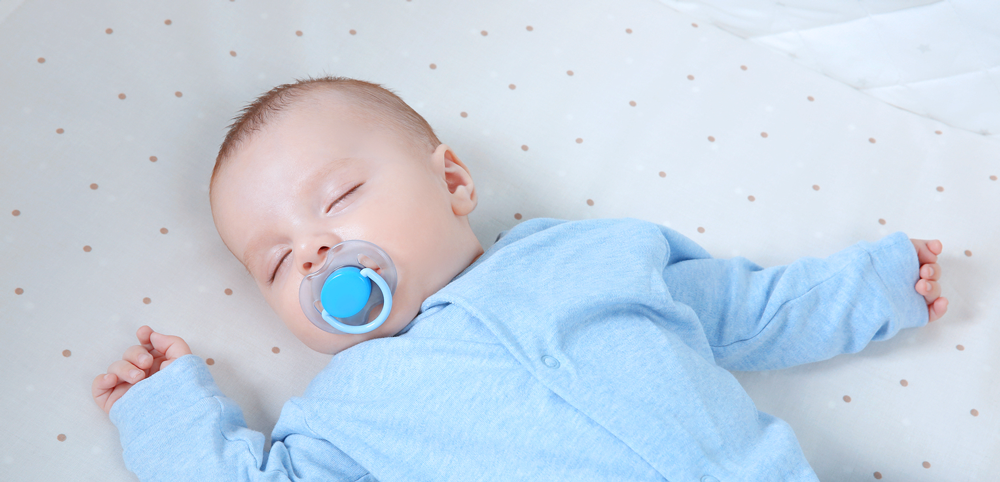
- Place your baby on the back. All babies under a year old should be put on their back for all naps and night sleep.
- Make sure the portacot is empty. Keep the portacot free of all loose bedding, pillows, loungers, and stuffed toys.
- Use the proper mattress. Only use the play yard mattress provided by the manufacturer—and never double up or add a soft topper. Remember, your baby’s mattress needs to be firm, whether they’re snoozing in a full-size cot, a bassinet, or a travel cot!
- Only use a well-fitted sheet. Portable cot fitted sheets need to be tucked under the mattress, so the sheet can’t snap up and become a suffocation risk.
- Keep the sides up: Never leave a baby in a mesh play yard with the side lowered or your little one could get trapped between the side and the floorboard.
- Remove the changing table. If your play yard features a raised changing table, remove it when your child is in the play yard so they don’t risk entrapment.
- Know when to retire your portacot. Discontinue using the play yard or travel cot when your little one can easily climb out.
What should I look for when buying a portacot?
While safety, of course, is number one, there are other points to consider when buying a travel cot, such as:
- Sturdiness: If you’re able, test out the portacot before buying. You’ll want to feel first-hand how sturdy it is. Does it feel a bit wobbly when you press on the top? If so, choose another.
- Functionality: Buying a play yard for an infant? Look for one with a bassinet feature where you detach the mattress from the bottom and safely raise it up so you can more easily lift your baby in and out of the cot. At the same time, you’ll want to make sure your portable cot has enough space for a toddler to rest and play comfortably when it’s time to lower the mattress.
- Size and weight: For many, the point of a portable cit is to be able to travel with it, so be sure it’s easy to fold and carry. If you’re a frequent flier, you also want a travel cot that’s small enough to meet airline size requirements—and light enough to lug through the airport!
- Weight limit: While portacots with mattresses at floor-level might not have a weight limit, most other portable cots/play yards have a recommended weight max of around 25 to 30 pounds. Either way, it’s always smart to double check.
- Ease of use: The last thing you want to do when you arrive at your destination with a cranky baby is take 10 minutes to assemble the travel cot! For example, look for play yards that unfold at the push of a button…and lock into place easily.
- Maintenance: Many portable cots feature removable, machine-washable fabric that can be a gamechanger when dealing with diaper blowouts and other unexpected oopsies.
Is it okay to buy a used portacot?
While it may be tempting to borrow a cot or a play yard—or buy one used—proceed with caution. As a pediatrician, I lean toward buying new so you know for-sure your portable yard isn’t missing any parts and meets the most recent safety standards. But I also know that buying new can be hard for some families. So, if you are buying a secondhand portacot or are borrowing one, keep the following in mind:
- Look for important numbers. If the portable cot is missing a label that includes the manufacturing date (or lot code) and manufacturer’s contact info, don’t buy it.
- Check for recalls. Found the label with all the portacot's manufacturing info? Great. Now check to see if it’s been recalled.
- Inspect for damage. Make sure the mesh of the play yard and the top rails are free of tears, holes, or loose threads. Check for missing or loose parts and ensure the portable cot is fitted with the manufacturer’s original mattress.
How can I help my baby sleep in a travel cot?
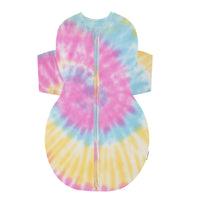
If you know ahead of time that your baby will be snoozing in a play yard or travel cot during a trip, arrange to have them sleep in one at home first. The more familiarity the better! Speaking of familiarity, recreating your baby’s sleep surroundings is key, too. That means, dim the lights about 30 minutes before night-night, play the same white noise your little one loves, and wrap your baby in the same sleep sack or swaddle they’re used to. If your baby has been sleeping in SNOO and swaddled in a SNOO Sack, use SNOObie or SNOObear to recreate SNOO’s white noise—and use the Sleepea 5-Second Swaddle in the portable cot. Sleepea is the exact same expert design as the award-winning SNOO Sack, minus the “wings” that secure SNOO sleepers into the bassinet.
Can you travel with SNOO?
If your baby has been blissfully sleeping in SNOO, you may be wondering if SNOO is portable. While SNOO is not a portacot, many SNOO users do travel with their beloved bassinet! But if packing and traveling with SNOO is impossible, don’t worry! Babies tend to sleep okay on trips without their SNOO…as long as:
- Your stay is under one week.
- Your baby has slept well in SNOO for one to two months.
- You continue to swaddle your baby.
- You use a strong white noise machine while away.
More on Baby Travel:
- Dr. Harvey Karp on Stress-Free Flying With a Baby
- Sleep Tips for Holiday Travel
- Help Your Baby Sleep in Any Hotel Room
- Travel Toys to Occupy Tots on the Go
- How to Handle Travel Nightmares When Flying With Kids
***
REFERENCES
- United States Consumer Product Safety Commission (CPSC): Non-Full-Size Baby Cribs Business Guidance & Small Entity Compliance Guide
- CPSC: Play Yards Business Guidance & Small Entity Compliance Guide
- American Academy of Pediatrics (AAP): Playpen Safety
- Kids in Danger: Product Hazards – Play Yards
- Safety Standard for Crib Mattresses. Federal Register. February 2022
- Consumer Reports: Is It Safe to Buy a Used Car Seat, Stroller, or Crib for Your Baby?
Disclaimer: The information on our site is NOT medical advice for any specific person or condition. It is only meant as general information. If you have any medical questions and concerns about your child or yourself, please contact your health provider. Breastmilk is the best source of nutrition for babies. It is important that, in preparation for and during breastfeeding, mothers eat a healthy, balanced diet. Combined breast- and bottle-feeding in the first weeks of life may reduce the supply of a mother's breastmilk and reversing the decision not to breastfeed is difficult. If you do decide to use infant formula, you should follow instructions carefully.


SHARE THIS ARTICLE
PARENT PICKS
Bestsellers