BABY
How to Dress a Newborn
Dressing a baby is harder than you’d think!

Written by
Happiest Baby Staff

Having a baby is wild. One day, you’re living your life, taking showers, getting dressed, and eating without giving any of it too much thought. Then you become a parent and suddenly, all those basic everyday tasks become mind-bogglingly foreign. After all, dressing yourself is one thing, but dressing a tiny human who can’t even put their tiny arm through their own sleeve—or tell you that their footie pjs are too hot—is, well, scary! We’re here to tell you it doesn’t have to be! Simply follow our been-there-done-that guide to dressing a newborn and take a deep breath. You got this!
How to Dress Baby in a Bodysuit
Newborn babies are cute, squirmy lumps offering you exactly zero help when it comes to getting them dressed. No matter! You can still get your little one into a bodysuit or lapped tee with ease by following these simple steps:
Step 1: Place your baby on a safe flat surface or support your little one on your lap.
Step 2: Unsnap the crotch of their bodysuit and scrunch it up like an accordion toward the neckline.
Step 3: Stretch the neck open wide.
Step 4: Gently pull the bodysuit over your baby’s head, using your fingers to guide the bodysuit away from your little one’s face or ears.
Step 5: Accordion-gather one sleeve at a time and tenderly guide your baby’s hand through the opening. (You can also put your fingers into the wee sleeve by way of the cuff then gently grasp your little one’s hand and pull the fabric over Baby’s arm. Repeat with the other arm.)
Step 6: Pull the bodysuit down the rest of your bub’s body and snap the crotch closed.
How to Dress Your Baby in a Bodysuit…Up the Body
You know how a lot of baby bodysuits and tees have snaps or lapped collars, where fabric overlaps on either side of the neck? They are designed like that so the neck can easily stretch over a baby—whether you’re pulling the bodysuit down over their face…or up their body. Here’s how you dress a baby in a bodysuit going up the body:
Step 1: Either place your baby on a safe flat surface or support them one on your lap.
Step 2: Unsnap the bodysuit and scrunch it up, crotch first, toward the neck.
Step 3: Stretch the neck hole open.
Step 4: Pull the bodysuit up over Baby’s legs until you reach the sleeves.
Step 5: Gather one sleeve up to the cuff and gently put your baby's hand through the opening. Or place your fingers into a sleeve from the outside, grasp your baby’s hand, and pull the fabric over the arm. Do the next side.
Step 6: Pull the bodysuit into the proper position and snap the crotch closed.
How to Undress Baby
As we now know, you can dress your baby by putting the bodysuit over their head or up their body...and the same holds true for undressing your baby. Simply unsnap the crotch and slowly remove each sleeve. Next, accordion-gather and slide the bodysuit up over Baby’s head, using your fingers to carefully keep the fabric from snagging on your little one’s face and ears. Alternatively, after you spring your little one’s arms from the bodysuit sleeves, gather the bodysuit under Baby’s armpits and gently wiggle it down over the body and legs. Pro tip: This down-the-body bodysuit change is especially helpful when you’re changing your baby post-diaper blowout!
How to Dress Your Baby in Footie Pajamas
For one-piece pajamas, unzip the garment and lay it on a safe flat surface. Next, open the PJs, making room for your little one to be placed inside. Put your baby inside the pajamas and place each leg in the proper leg hole…then tackle the arms. Again, be gentle, scrunching the sleeves, so you can easily guide your bub’s arms through the cuff. Finally, zip the jammies all the way! (PS: Zip-up PJs are way easier to navigate at night than snaps!)
How to Dress a Baby in Cold Weather
When the thermostat dips to below 75 degrees Fahrenheit, you need to embrace layers. That means, when indoors, dress your newborn in a long-sleeve bodysuit plus another layer, like a footed pants, a receiving blanket, or pajamas. But if your Baby was born premature (before 37 weeks), add one additional layer until their weight reaches that of a full term baby. (Premature babies have a harder time adjusting to changes in temperature.) In general, babies are usually most comfortable wearing one more layer than you’re wearing.
When out and about in cool weather, dress your baby in a long-sleeve cotton bodysuit, soft pants, socks, and a sweatshirt or sweater. If “slightly cool” turns to cold, don’t forget the baby hat, mittens, and warm booties to keep their head, hands, and feet feeling toasty! And if you’re wearing a coat or a jacket, Baby should be wearing one, too. There are a couple caveats, though…
Skip the sweater if… you’re babywearing. Your bub likely doesn’t require a sweater or sweatshirt under their coat if they’re in the baby carrier. Your body heat provides the just-right amount of warmth.
Skip the coat if… you’re in the car. Bulky coats and snowsuits should not be worn in the car seat. They leave too much space under the harness, endangering your baby in the event of a crash. Instead, secure your baby into the car seat without their jacket, then place a blanket on the lower part of their body. Once the car warms up, ditch the blanket. (Learn more about winter care tips for newborns.)
How to Dress a Baby in Warm Weather
As soon as the temperature bumps above 75 degrees Fahrenheit, dress your bug in a single layer of loose, lightweight clothing. Breathable cotton clothes work wonders for keeping babies cool—and they help protect their skin from the sun when shade is out of reach. Sun hats with wide brims are also a smart move when shade is illusive. (Baby should be in the shade as much as possible.) Learn more about keeping Baby safe and comfortable in warm weather.
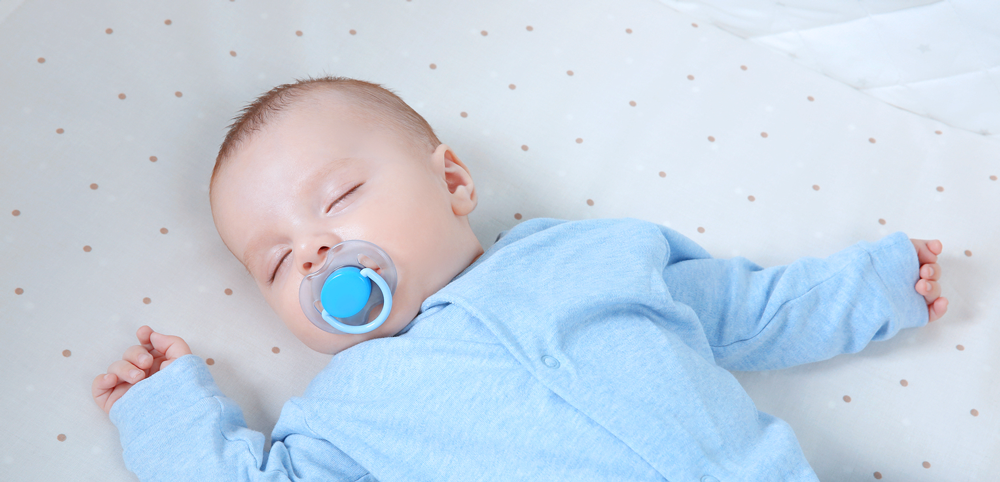
How to Dress a Baby for Sleep
Summer, spring, winter, fall—it doesn’t matter: Baby’s room should hover between 68 to 72 degrees Fahrenheit (20 to 22.2 degrees Celsius). It’s the most comfortable temperature range to sleep in—and it helps prevent dangerous overheating which can lead to sudden infant death syndrome. That said, it’s not always easy to ensure your baby’s room falls into this best-for-sleep zone. (Case in point: Heat waves, cold snaps, and older homes!) For help dressing your baby for sleep no matter the temperature…
- Stick with 100% cotton: Bodysuits, PJs, swaddles, sleep sacks, cot sheets, and bassinet sheets should be made from 100% cotton to ensure breathability. (Avoid synthetic fabrics, like some jerseys and fleece, which aren’t breathable and can contribute to dangerous overheating.)
- Check TOG ratings: Many swaddles and sleep sacks feature a TOG rating, which is short for Thermal Overall Grade. Choose a higher TOG rating in the winter (without exceeding 4 TOG) and go for a lower TOG rating in the summer.
More on TOG Ratings
Here’s a breakdown to help you select the TOG rating that best works for your baby:
- 75 to 80 degrees Fahrenheit: Use a swaddle that’s less than or equal to 1.0 TOG and dress your baby in a short-sleeve cotton bodysuit
- 69 to 74 degrees Fahrenheit: Use a swaddle that’s less than or equal to 2.0 TOG and dress your baby in long- or short-sleeve cotton pajamas.
- 50 to 68 degrees Fahrenheit: Use a swaddle with a 2.0 to 3.5 TOG and dress your baby in long-sleeve cotton PJs with or without a cotton bodysuit
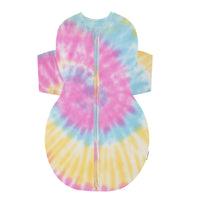
Our original award-winning Sleepea Swaddle and SNOO Sack are made from 100% GOTS-certified organic cotton and are perfect for all-season wear, with a TOG value that ranges from 0.5 to 0.8. (Remember, your baby’s clothes will add to the TOG value.) For cooler nights and naps, our new Comforter Sleepea and SNOO Comforter Sack (also made from ultra-breathable organic cotton) have a TOG rating of 2.0. (Learn more about keeping your sleeping baby safe and warm during the winter.)
How Not to Dress a Baby for Sleep
Beyond setting the thermostat to the ideal sleeping temperature and dressing your bub in breathable cotton, it’s important to avoid the following sleepytime slip-ups:
- Don’t put a hat on your baby. Covering your baby’s head during sleep reduces their ability to give off extra heat. Plus, a hat can accidentally slip over your little one’s face and cause breathing difficulties.
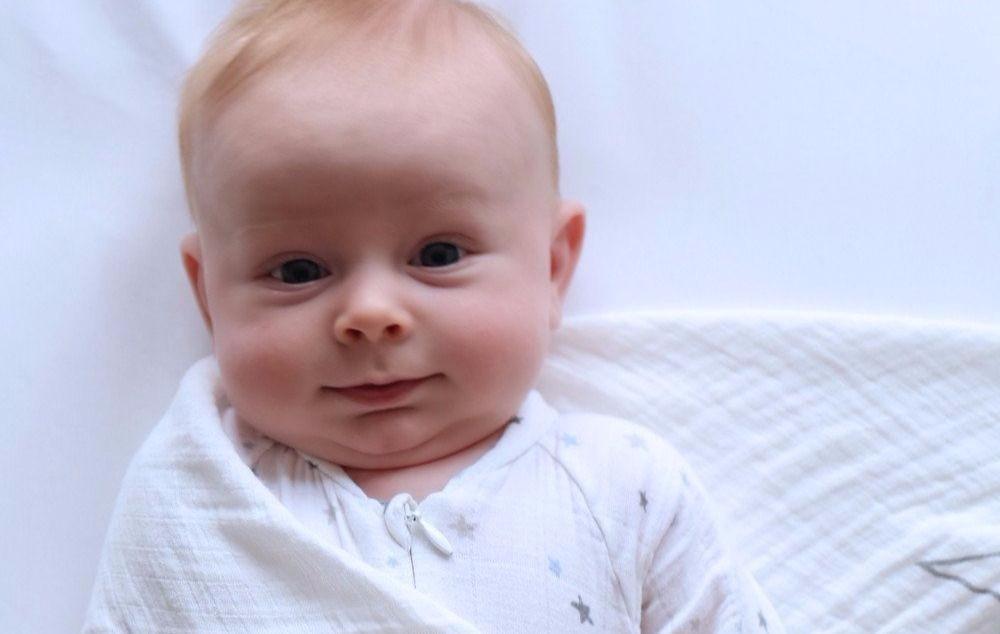
- Don’t wrap Baby in a heavy blanket. In cool weather, dress your bub in a long-sleeve bodysuit or footie pajamas and a lightweight swaddle (or sleep sack, for older babies). Heavy blankets are not meant for swaddling as they make Baby too hot and can unwrap and become a suffocation risk. (Loose blankets are never safe for babies!)
- Don’t reach for fleece. Synthetic fabrics, like fleece, aren’t breathable and can increase your baby’s risk of overheating, which means fleece jammies and fleece swaddles and sleep sacks should be avoided (For extra warmth, choose a breathable cotton swaddle that’s lightly insulated, like our Comforter Sleepea.)
- Don’t swaddle too long. Once your baby has learned to roll, swap the cotton swaddle for a hands-free sleep sack. (If your rolling baby weighs 33 pounds or less, they can safely stay in their extra-large Sleepea—if you undo the shoulder snaps, allowing your bub to sleep arms-free.) Of course, if your little one is snoozing in SNOO, they can remain safely wrapped in their SNOO Sack until they graduate to the cot.
Looking for breathable organic cotton swaddles and blankets? We’ve got your baby covered!
- Award-Winning Sleepea Baby Swaddle
- Comforter Sleepea
- 100% Organic SNOO Sleep Sack
- 100% Organic Muslin Blanket
- Comforter SNOO Sleep Sack
Disclaimer: The information on our site is NOT medical advice for any specific person or condition. It is only meant as general information. If you have any medical questions and concerns about your child or yourself, please contact your health provider. Breastmilk is the best source of nutrition for babies. It is important that, in preparation for and during breastfeeding, mothers eat a healthy, balanced diet. Combined breast- and bottle-feeding in the first weeks of life may reduce the supply of a mother's breastmilk and reversing the decision not to breastfeed is difficult. If you do decide to use infant formula, you should follow instructions carefully.

SHARE THIS ARTICLE
PARENT PICKS
Bestsellers