PREGNANCY
38 Weeks Pregnant: Let’s Talk About Labour
Time to get prepared on what to expect during the 3 stages of labor!

Written by
Dr. Harvey Karp
Just like you, your baby is getting ready for their grand entrance! At 38 weeks, your little one is considered “early term.” They’ll be officially “full term” at 39 weeks—so you’re almost there. Early term babies aren’t quite finished growing, but they’re very close.
Your Baby at 38 Weeks
Your baby weighs between 2.7 and 4 kilograms (6–9 pounds) and measures a little over 45 centimetres long. Their brain is primed and ready to help them adjust to the new world of bright lights, faces, sounds, smells, and touch.
This week, your baby’s liver completes its final development, and their lungs are preparing for that first big breath. At the moment, the air sacs are collapsed, but they’re coated with surfactant—a special substance that will help them stay open once your baby begins breathing.
The shock of the outside world—cool air, light, sound—will trigger their brain to switch on their breathing. Delaying cord clamping for 60 to 90 seconds after birth gives your baby an extra boost of blood, oxygen, iron, and stem cells.
Because babies have proportionally more exposed skin than adults, they lose heat quickly. To combat this, they’ve built up brown fat, which provides warmth in their first days. Skin-to-skin contact after birth also helps regulate their temperature, encourages bonding, and supports breastfeeding.
How Many Months Is 38 Weeks?
At 38 weeks, you’re about 8 months and 3 weeks pregnant—just a fortnight to go!
How Big Is My Baby at 38 Weeks?
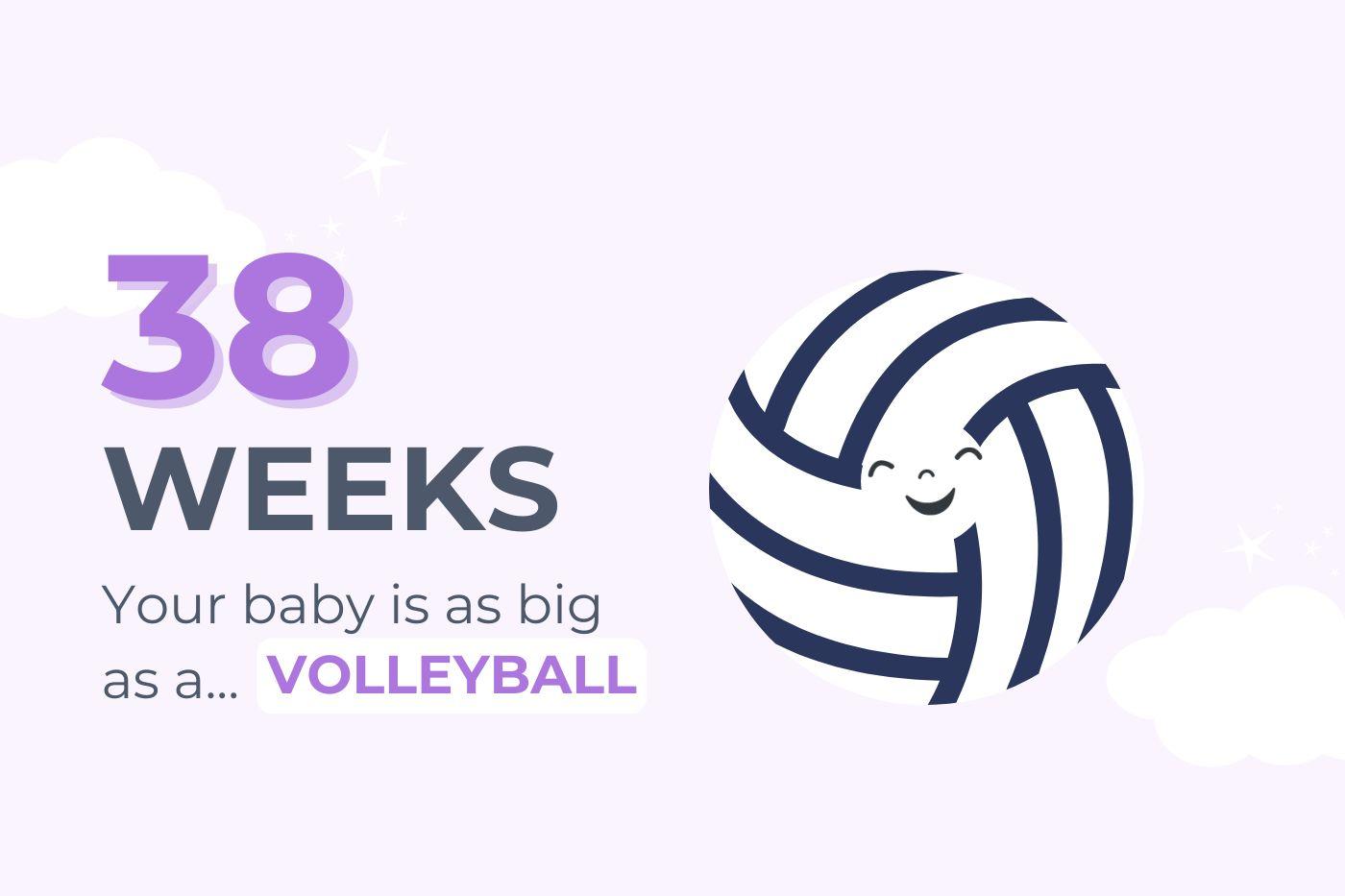
Your baby is about the size of a volleyball.
38 Weeks Pregnant: What to Expect
Your womb has grown from the size of a small pear (around 60 grams) to nearly 1.1 kilograms—and with baby pressing down, you may feel every bit of it. Walking may be slow and uncomfortable, while sitting or lying down might not bring much relief either. On top of that, your bladder is under constant pressure—so loo trips are frequent. Still, keep drinking plenty of water—it’s vital for you and baby.
As you approach labour, lean on your support network. If people offer help, say yes—you’re almost at the finish line!
Signs of Labour at 38 Weeks
- Baby “drops” lower into your pelvis
- Cervix begins to soften and dilate
- Increased cramps and back pain
- Loose stools/diarrhoea
- Weight gain slows or stops
- Extreme fatigue
- Mucus plug and/or bloody show
- Stronger, more regular contractions
- Waters breaking
Cramping at 38 Weeks
Cramping is common at this stage, and usually a sign your body is preparing for birth. Causes include:
- Braxton Hicks contractions: “Practice” tightenings—mild, irregular, and often relieved by rest or water.
- Cervical changes: Effacement and dilation can feel like dull cramps.
- Baby dropping: Extra pressure in the pelvis can bring aches and cramps.
- Real labour contractions: Unlike Braxton Hicks, these become stronger, more regular, and don’t ease with movement.
- Digestive changes: Gas or constipation can also mimic cramps.
Call your midwife or doctor if:
- Cramps are severe or accompanied by bleeding
- Movements noticeably decrease
- Your waters break
- Contractions become regular and intensify
38 Weeks Pregnant To-Do List
- Stock up on labour fuel: Have easy snacks and hydrating drinks on hand—labour is hard work! Pack electrolyte drinks, fruit, or light meals.
- Buy household basics: Toilet paper, detergent, pantry staples—get them now to avoid errands later.
- Bring nipple cream: A lanolin- or shea butter–based cream can soothe sore nipples in the early days of breastfeeding.
- Practise labour affirmations: Positive mantras can help you stay calm and focused. Write them down and take them with you.
- Waterproof your mattress: In case your waters break while you sleep, a mattress protector saves cleanup stress.
How to Tell Braxton Hicks from True Labour
FeatureBraxton HicksTrue LabourPain levelMild, uncomfortable tighteningBuilds from mild to strong over timeFrequencyIrregular, doesn’t get closer togetherRegular, gets closer togetherLocationUsually felt in the frontOften starts in the back, moves to the frontDurationVaries, short, no progression30–70 seconds, grows longer and strongerStops with rest?Yes—improves with hydration/movementNo—keeps going regardless of activity
Preparing for Labour
Labour is divided into three stages:
- Stage 1: Early labour, active labour, and transition. Early labour often feels like period pain or backache, progressing to longer, stronger, and closer contractions. For first-time mums, this stage may last 6–12 hours (sometimes longer). Active labour means stronger, regular contractions—if you’re planning an epidural, this is the time. Transition is the most intense but shortest part—ending when your cervix reaches 10cm.
- Stage 2: Pushing and delivery of your baby. This stage may feel overwhelming but ends with your baby placed on your chest.
- Stage 3: Delivery of the placenta. Often quick and less intense, especially if breastfeeding begins immediately, as that stimulates uterine contractions.
Post-birth, shaking, stitches, and blood loss are all normal. Midwives or doctors will monitor you closely as your body begins recovery.
38-Week Pregnancy Fun Fact
Most TV shows dramatise waters breaking with a gush, but in reality, it’s usually a trickle—and often happens during active labour. Rarely, babies are even born “en caul,” still inside the amniotic sac.
Pregnancy Quote of the Week
“There is a secret in our culture, and it’s not that birth is painful. It’s that women are strong.” — Laura Stavoe Harm
Disclaimer: The information on our site is NOT medical advice for any specific person or condition. It is only meant as general information. If you have any medical questions and concerns about your child or yourself, please contact your health provider. Breastmilk is the best source of nutrition for babies. It is important that, in preparation for and during breastfeeding, mothers eat a healthy, balanced diet. Combined breast- and bottle-feeding in the first weeks of life may reduce the supply of a mother's breastmilk and reversing the decision not to breastfeed is difficult. If you do decide to use infant formula, you should follow instructions carefully.





SHARE THIS ARTICLE
PARENT PICKS
Bestsellers